Find the Right Air Purifier — Start Here
Air purifiers range from $50 to $1,500 and claim to solve everything. Most of the confusion comes from not knowing what problem you're actually trying to solve. Four steps to get it right.
Check My Air Quality →Check Your Outdoor Air Quality
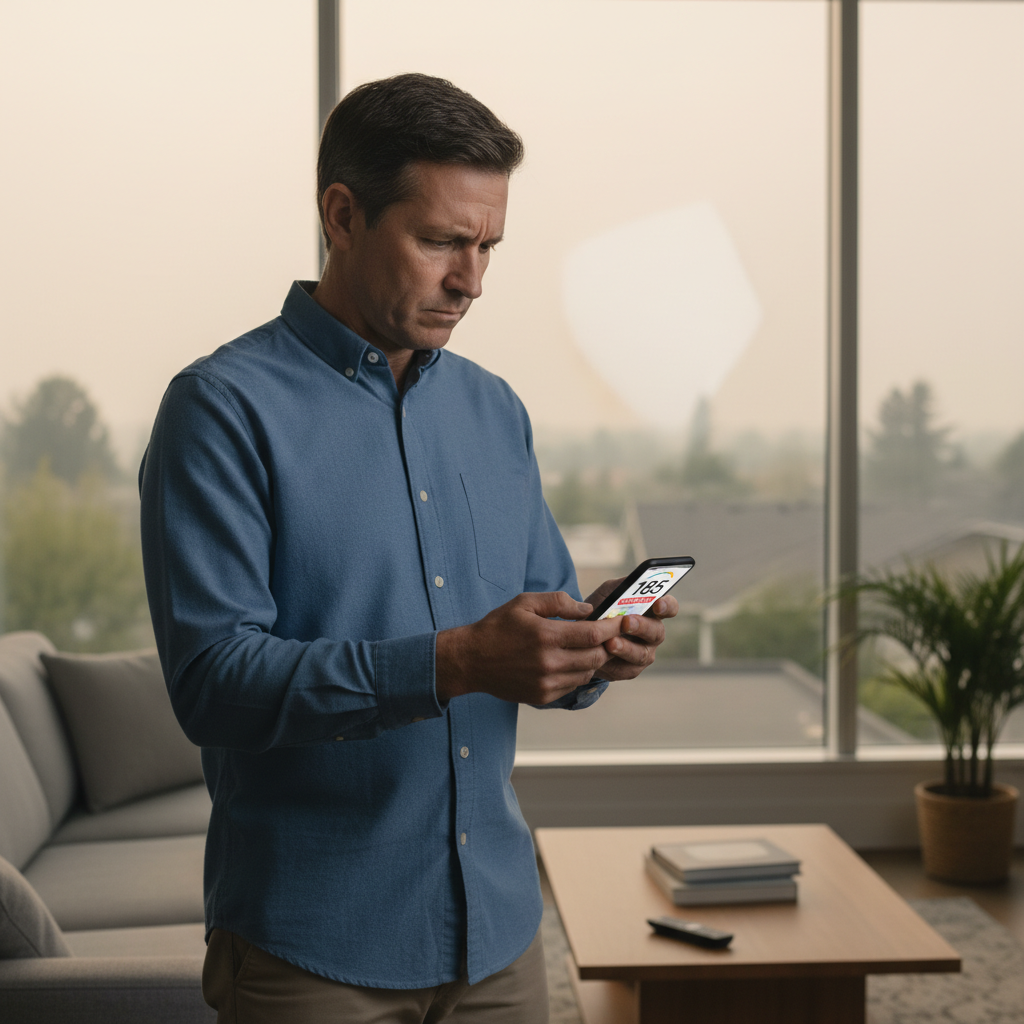
Outdoor air quality directly affects your indoor air — especially if you open windows, run a whole-house fan, or have any fresh air intake. Use our free ZIP code tool to see your current AQI, primary pollutants, and 3-day forecast. If your outdoor AQI is regularly above 100, a HEPA air purifier is a concrete health investment, not just a nice-to-have.
Even if your outdoor air looks clean today, indoor air is typically 2-5x more polluted than outdoor air due to dust, cooking fumes, pet dander, off-gassing from furniture, and cleaning products. The outdoor check is a starting point, not the full picture.
Know Your Primary Concern
Different air quality problems need different solutions. Pick the one that fits your situation:
Wildfire Smoke / PM2.5
True HEPA (H13 grade) is non-negotiable. Look for CADR specifically rated for smoke, not just dust. Many budget purifiers pass dust tests but fail on the finer smoke particles.
Allergies & Asthma
HEPA removes pollen, dust mites, pet dander, and mold spores. For asthma, add an activated carbon filter to catch VOCs and odors that trigger attacks.
Odors / VOCs / Chemicals
HEPA alone won't help here. You need activated carbon — the heavier the better. Austin Air's HealthMate has 15 lbs of carbon. Most budget purifiers have a thin carbon pre-filter that saturates in weeks.
General / Preventive
Any good HEPA purifier helps. The Coway AP-1512HH at $150 is the most recommended purifier on the internet for a reason — it handles everyday dust, dander, and particles without overthinking it.
Understand the Filter Types
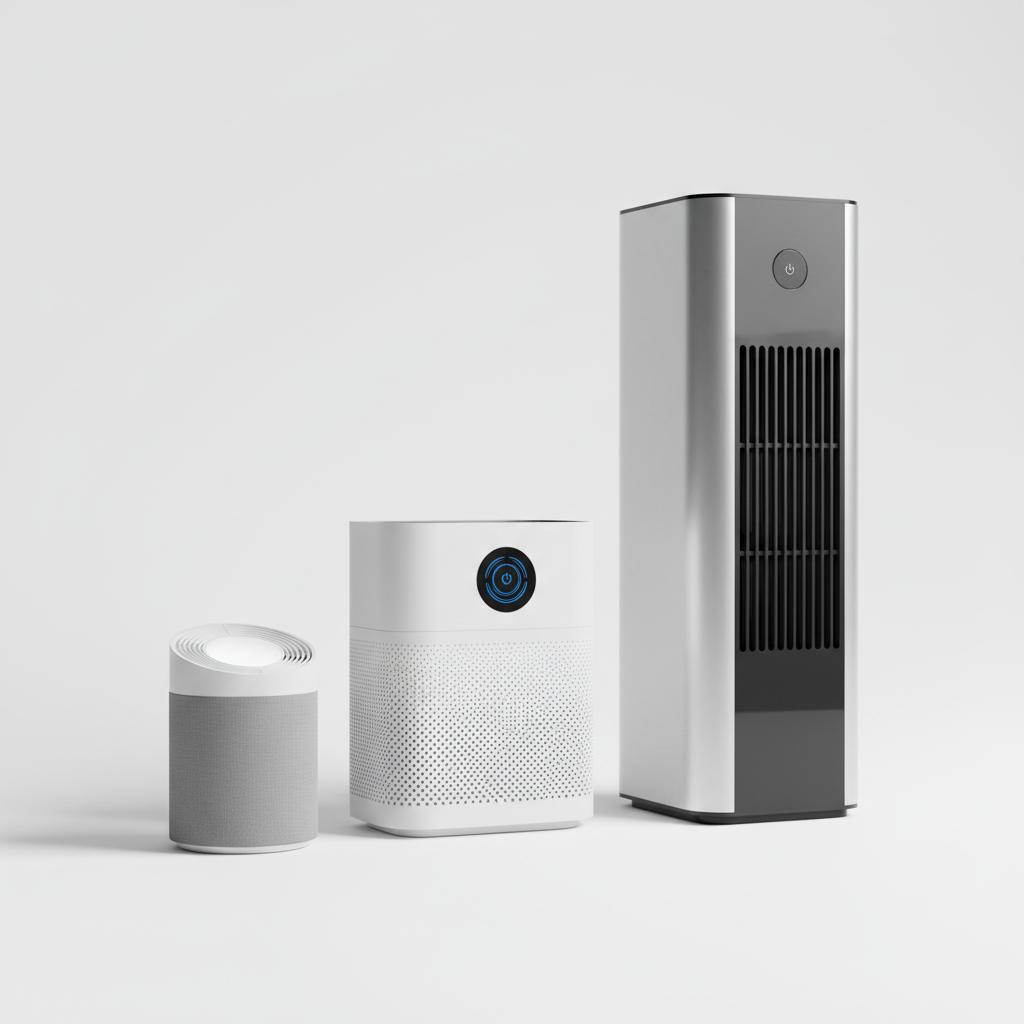
Three main filter types, each does something different:
- HEPA — captures 99.97% of particles 0.3 microns and larger (dust, pollen, pet dander, PM2.5, bacteria). The standard for most homes. Look for H13 or H14 for the best performance.
- Activated Carbon — absorbs gases, VOCs, odors, formaldehyde, ozone. Doesn't capture particles. Essential for wildfire smoke (which has both particle and gas components) and chemical sensitivity.
- Ionizers / UV — ionizers produce trace ozone (counterproductive for air quality). UV kills bacteria but doesn't filter particles or gases. Neither replaces HEPA.
Most quality purifiers combine HEPA + carbon. That's the right combination for most homeowners.
Size It Right
The most common mistake is buying a purifier that's too small for the room. Look at CADR (Clean Air Delivery Rate) — higher is better.
Quick rule: CADR should be at least ⅔ of the room's square footage. A 300 sq ft bedroom needs a purifier with at least 200 CADR for smoke.
- Bedroom (up to 300 sq ft): Coway AP-1512HH (CADR 246), Levoit Core 300S (CADR 145)
- Living room (300-800 sq ft): Winix 5500-2 (CADR 360), Blueair Blue Pure 211i Max (CADR 380)
- Large space (800+ sq ft): Alen BreatheSmart 75i (CADR 347, 1,300 sq ft), Coway Airmega ProX (CADR 510)
- Serious air quality issues: IQAir HealthPro Plus (CADR 300, but H14 HEPA filters particles 10x smaller)
Don't Forget Radon
Most homeowners think about particles and odors, but not radon. Radon is a colorless, odorless radioactive gas that seeps from soil into basements and lower floors. It's the #1 cause of lung cancer among non-smokers in the US — 21,000 deaths per year — and 1 in 15 American homes has elevated radon levels.
Air purifiers do not remove radon. You need a separate radon test kit ($15-25) and potentially a mitigation system if results come back above 4 pCi/L.
Our ZIP code tool shows your county's radon risk zone alongside air quality data.
Ready to Check Your Air?
Enter your ZIP code to see live AQI, radon risk, and personalized recommendations for your area.
Check My Air Quality →